admin
admin

Do you want to design a high-converting Product page for your Shopify D2C brand?
Then, this blog is ideal for you to learn the top ways to prepare your product page for sale.
Why Product Pages Matter More for D2C Than Any Other Model?
As you know, D2C brands live without middlemen. No distributor to explain value. No store staff to upsell.
That’s why a D2C Shopify store is not just a product brochure. It’s your best-performing salesperson, working 24/7 without breaks.
For Shopify for D2C brands, the Product page reveals one brutal truth: scroll or sale.
A high-converting Shopify product page blends psychology, performance, storytelling, and top-performing development.
Miss one piece—and revenue leaks quietly while your ads keep burning cash.
In that case, your product page must:
- Build trust from zero
- Answer objections instantly
- Create desire emotionally
- Close decisively
A weak product page doesn’t fail loudly. It rots conversion rates silently.
How to Design a High-Converting Product Page on Shopify
To create a Shopify store, you can use these tricks without any technical editing.
1. Start With a Conversion-Focused Page Structure
Before colors, fonts, or animations—architecture first.
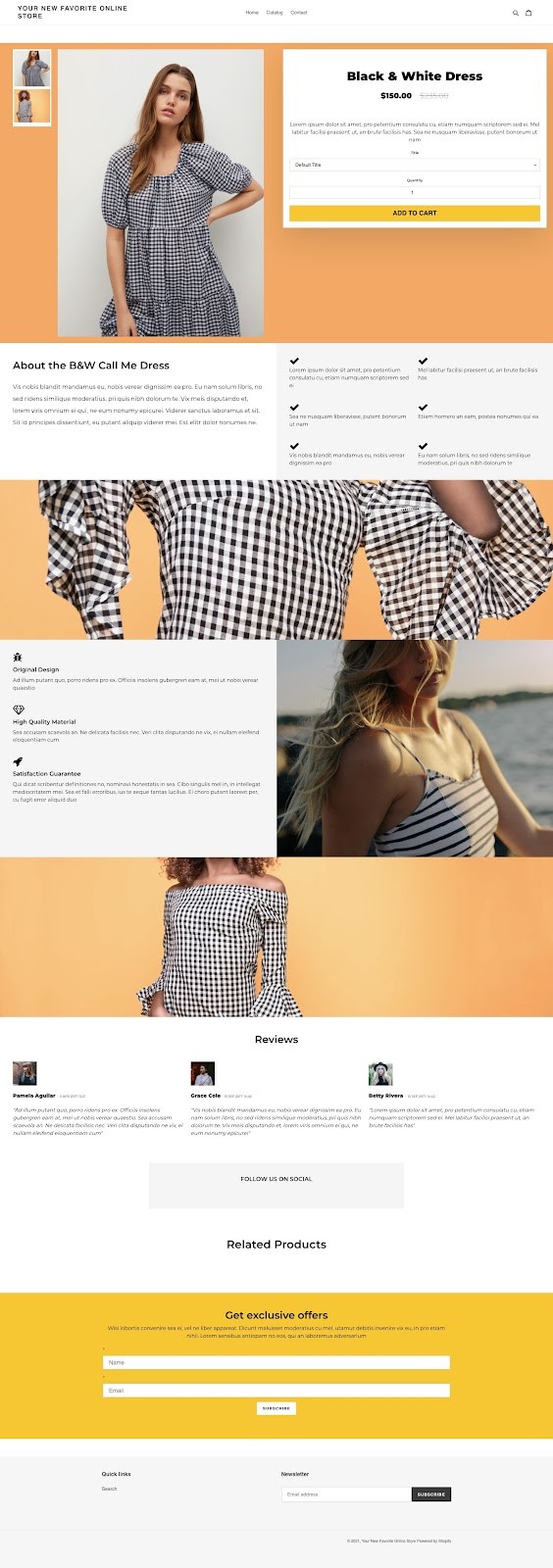
A high-converting Shopify product page follows this flow:
- Visual hook (emotion)
- Core value proposition (logic)
- Proof (trust)
- Details (clarity)
- CTA reinforcement (urgency)
Think of it like a sales pitch deck—slide by slide, designed to win.
Pro tip:
Avoid cluttering the details in paragraphs because people pay more attention to elements than to long paragraphs.
2. Hero Section: Sell the Outcome, Not the Product
Your hero section decides if users stay or bounce.
What works:
- Lifestyle images over plain product shots
- One crisp headline focused on outcome
- Short supporting line that clarifies why it’s different
Bad example:
“Organic Face Serum – 30ml”
High-converting example:
“Clearer Skin in 14 Days—Without Harsh Chemicals”
You’re not selling serum.
You’re selling confidence in the mirror.
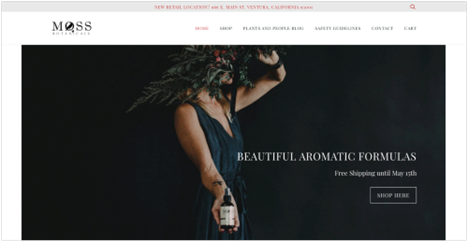
This is where professional Shopify store development services outperform DIY themes—because psychology beats aesthetics every time.
3. Product Images That Answer Questions Before They’re Asked
D2C shoppers zoom. They scroll. They inspect like detectives before making purchases.
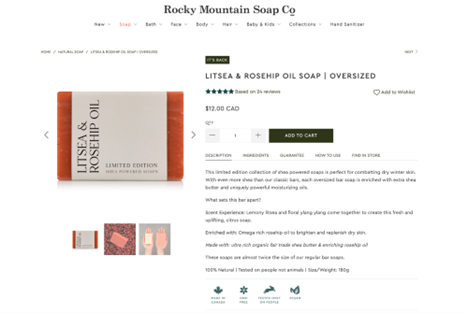
For that reason, your image stack should include:
- Lifestyle usage shots
- Close-ups of texture/material
- Size comparison visuals
- Benefit-callout images
- Packaging + unboxing shots
Each image should answer one silent objection.
Rule of thumb:
If a customer emails support with a question—your images failed.
A seasoned Shopify development agency designs galleries that reduce support tickets and boost conversions simultaneously. That’s operational efficiency with style.
4. Product Descriptions That Sell Without Sounding Salesy
As we earlier mentioned, nobody wants a wall of text. But you need to display as much information as you can to build trust.
To resolve this conflict, you need to balance the quality and readability for your product’s description.
You structure your description like this:
- Short benefit-led intro
- Scannable bullet points
- Simple language (no jargon flexing)
- Real-world use cases
Instead of:
“Made with premium materials for durability.”
Write:
“Built to survive daily wear, drops, and real-life chaos.”
You’re not writing literature. You’re writing a conversion copy.
This is where D2C brands win by partnering with a Shopify development company in India—strong English, global tone, conversion mindset, sane budgets.
5. Social Proof: Trust Is the New Currency
No reviews = no sales. Period.
High-converting Shopify product pages include:
- Star ratings near the title
- Photo or video reviews
- Short testimonials with outcomes
- UGC pulled from Instagram
Pro move:
Highlight specific results, not vague praise.
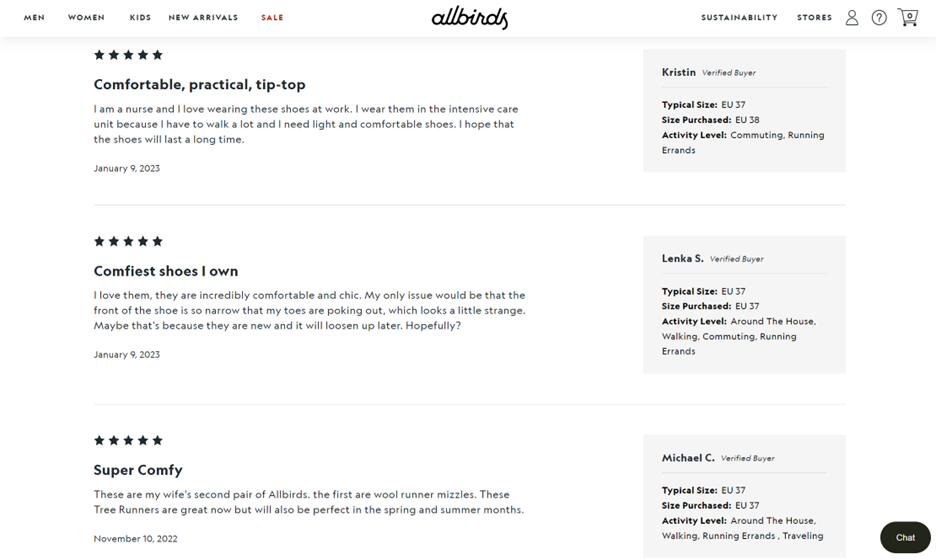
Trust scales revenue faster than discounts ever will.
6. Price Framing & Offer Psychology
Your price is not a number. It’s a story.
High-converting pages:
- Show original price + discounted price (if applicable)
- Explain why it’s worth the price
- Use bundles to increase AOV
- Add subtle urgency (low stock, limited batch)
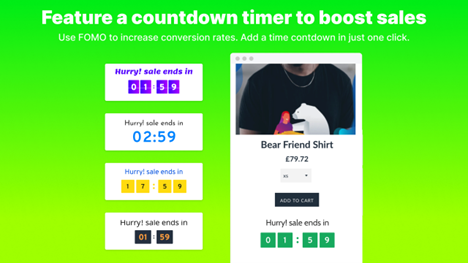
Smart Shopify store development services don’t just “add a price,” they architect perceived value.
7. Bulletproof CTAs That Don’t Whisper
Your CTA should not be so polite, but it should be confident.
High-performing CTA principles:
- Clear action language
- Visible without scrolling too much
- Repeated logically throughout the page
Weak:
“Add to cart”
Stronger:
“Get Clear Skin Today”
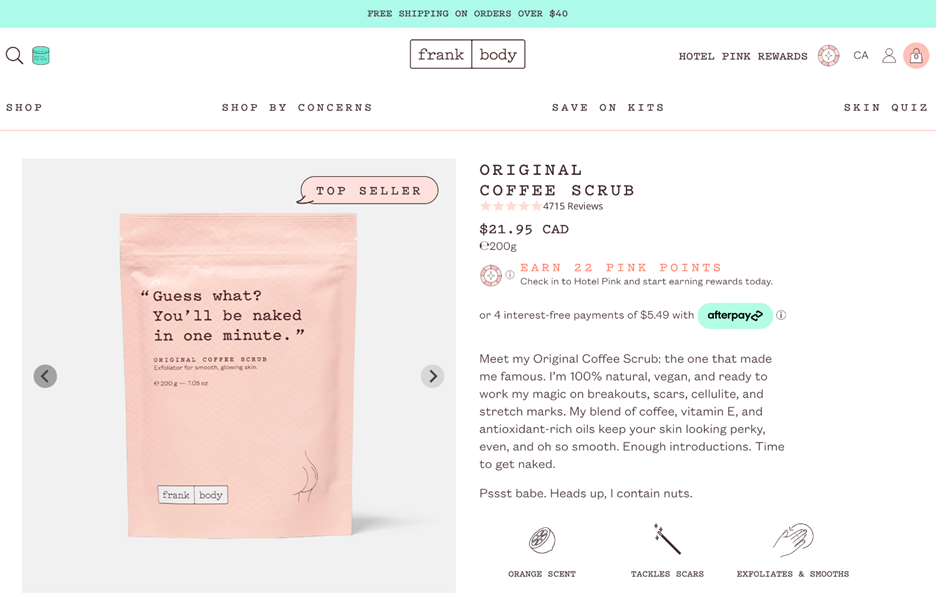
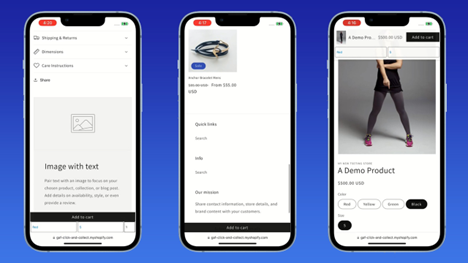
To get sales from the Mobile traffic, sticky CTAs on mobile are non-negotiable. Here is an example of an effective CTA of a Shopify store in the mobile version.
8. Shipping, Returns & FAQs: Kill Anxiety Fast
D2C shoppers hesitate silently.
Answer these before doubt kicks in:
- Delivery time
- Return policy
- Payment options
- Guarantees
Transparency converts. Ambiguity kills carts.
This is where experienced Shopify for D2C brands execution separates amateurs from operators.
9. Speed, Mobile UX & Performance
A beautiful slow page converts like a locked store.
High-converting Shopify product pages must:
- Load under 3 seconds
- Be thumb-friendly
- Avoid heavy scripts
- Optimize images aggressively
Google doesn’t forgive slowness. Customers don’t either.
A professional Shopify development company in India brings technical discipline—clean code, optimized assets, conversion-ready builds.
10. Analytics, Testing & Continuous Optimization
Your first version is never perfect.
Winning D2C brands:
- Track scroll depth
- Monitor add-to-cart rate
- A/B test headlines and CTAs
- Improve monthly, not yearly
Conversion is not a project. It’s a process.
Why D2C Brands Choose Professional Shopify Development Services
DIY Shopify stores look fine on the surface.
As you can launch it fast, follow templates, and check basic boxes.
But strategic D2C brands aren’t building stores—they’re building a distribution and marketing channel for products to sell.
That’s where professional Shopify development services enter the boardroom.
A seasoned Shopify development agency designs conversion-driven UX rooted in buyer psychology instead of using templates. As a result, you get Shopify stores without trial-and-error plugins, broken mobile layouts, and performance issues after you spend on ads. Everything is developed right before launch, saving weeks of rework and hidden costs.
Additionally, scalability.
As traffic, products, and campaigns grow, your store doesn’t wobble. It holds. Clean code, optimized performance, and flexible architecture ensure your Shopify store grows with your ambition—not against it.
Most importantly, professional Shopify development delivers higher ROI on ads and traffic. When every click costs money, conversion efficiency becomes profit.
In short:
DIY stores survive.
Strategic Shopify stores scale.
And scaling is where D2C brands win.
Final Thought: Your Product Page Is a Growth Asset
A high-converting Shopify product page is where:
- Branding meets revenue
- Storytelling meets psychology
- Design meets discipline
For Shopify for D2C brands, this page decides survival and scale.
If you’re serious about conversions—not just cosmetics—partner with a Shopify development company in India that understands business, not just buttons.
Because in D2C, your product page doesn’t just sell products. It prints trust, loyalty, and repeat revenue.
And that’s not design. That’s strategy.